Chinamaxxing in the Maldives : Far More Than an Internet Trend
As someone who was once chronically online – largely an occupational hazard of keeping up with pop culture and digital trends – I watched my TikTok For You Page slowly transform. Herbal teas, traditional remedies and steaming bowls of congee began replacing the ubiquitous chia puddings and granola breakfasts that had dominated my feed for years.
Somewhere along the way, I found myself captivated by the videos of Mr Biao, a Chinese content creator who documents rural life in north-eastern China. Whether he is making peanut candy, sewing winter trousers entirely from scratch, or concocting some mysterious sauce from what appears to be compressed bricks, his content possesses an almost hypnotic quality.
@mrbiao2025 #mrbiao ♬ original sound – Mr.Biao
None of his videos are in English, yet the quick cuts, nostalgic Chinese melodies from the 1970s and the vintage tools he uses – the old sewing machines with steel wheels and heavy foot pedals, the kind I last saw in my grandmother’s room – feel endlessly fascinating. I kept watching long after I should have gone to sleep.
Over the past year, the term Chinamaxxing has emerged across corners of the internet, giving a name to this growing fascination with Chinese culture and everyday life. Often framed through the lenses of wellness, food and domestic rituals, the trend has produced endless videos of people replacing coffee with herbal teas, embracing traditional remedies, and joking that, “You met me at a very Chinese time in my life.”
Yet the phenomenon has inevitably spilled into fashion, where an increasing number of brands and consumers are embracing silhouettes, details and aesthetics rooted in Chinese dress traditions.
Maybe I’ve Been Chinamaxxing My Entire Life
The reason I find myself writing about Chinamaxxing is not simply because it is an internet trend. My fascination with Chinese culture and art long predates TikTok algorithms and viral discourse.
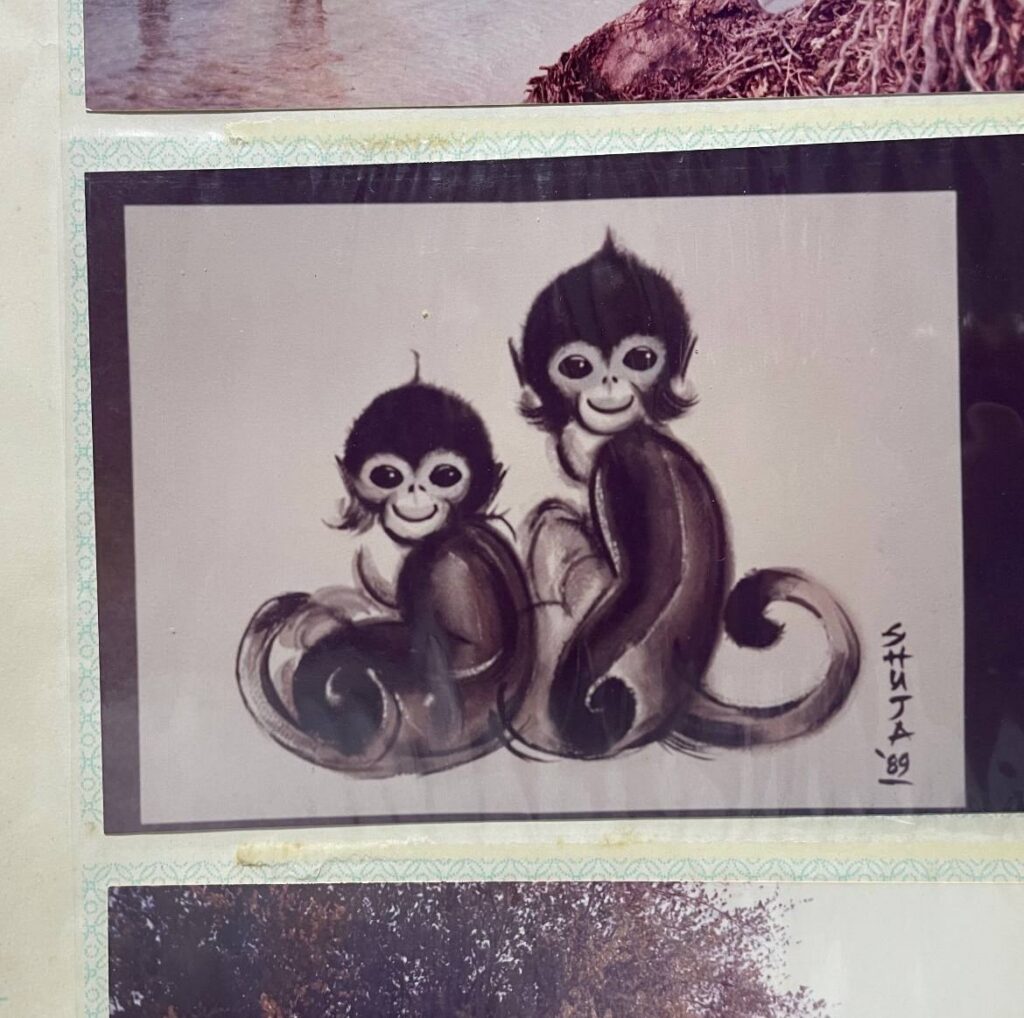
I grew up with a father who spoke constantly about Chinese art and aesthetics. He was deeply inspired by Chinese watercolour painting and calligraphy, collecting artworks and producing his own ink paintings with remarkable enthusiasm. One of his earliest works (and still one of my favourites) was painted during his student days in the Philippines: two small monkeys rendered in black ink.
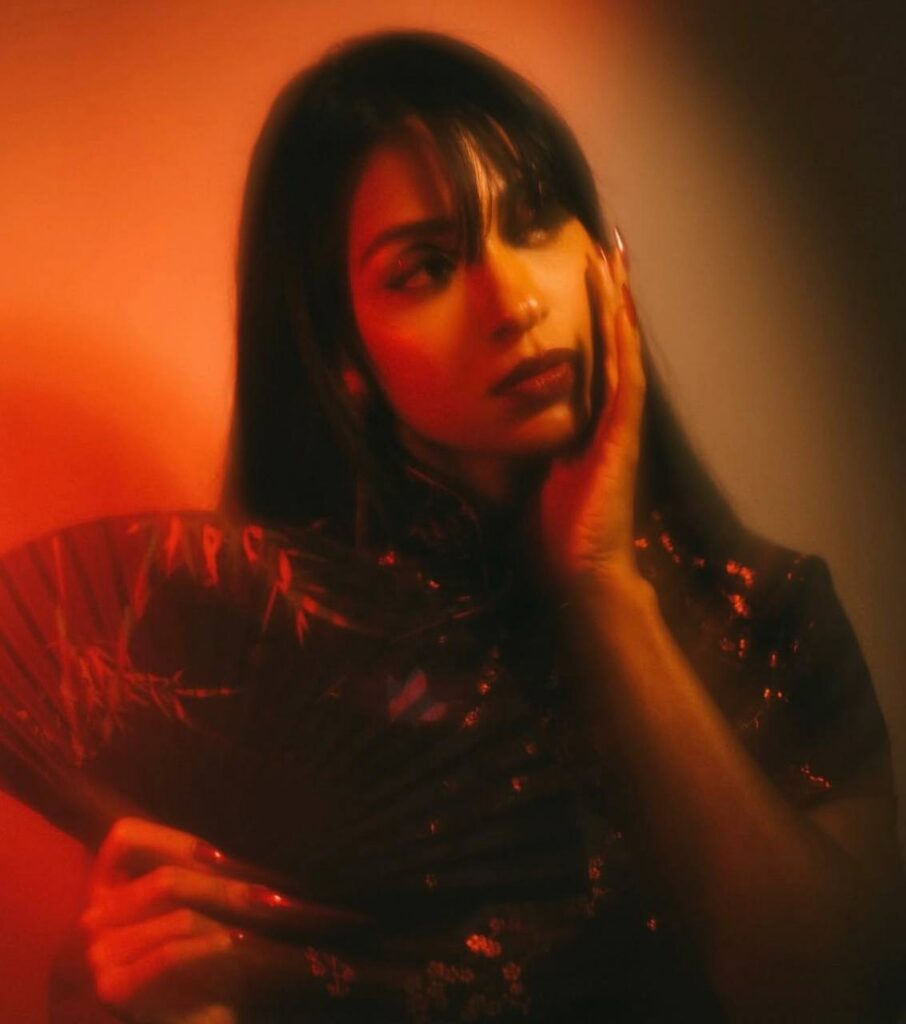
Later, in 2012, I travelled to Chengdu for ten days, immersing myself in the city’s culture, art and food. I still remember wandering through ancient alleyways, seeing giant pandas lazily chewing bamboo, hopping endlessly between temples, and marvelling at everything before me. I even posed for a photograph in a bright red hanfu robe – a touristy, awkward experience, admittedly, but a memory I still treasure.
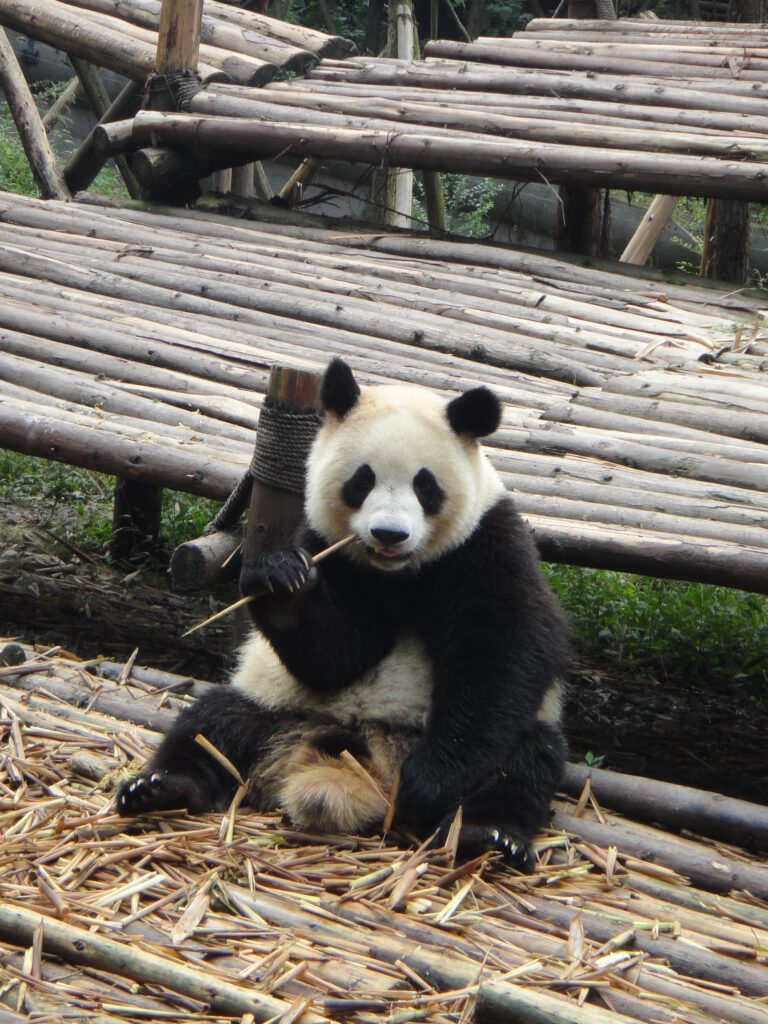
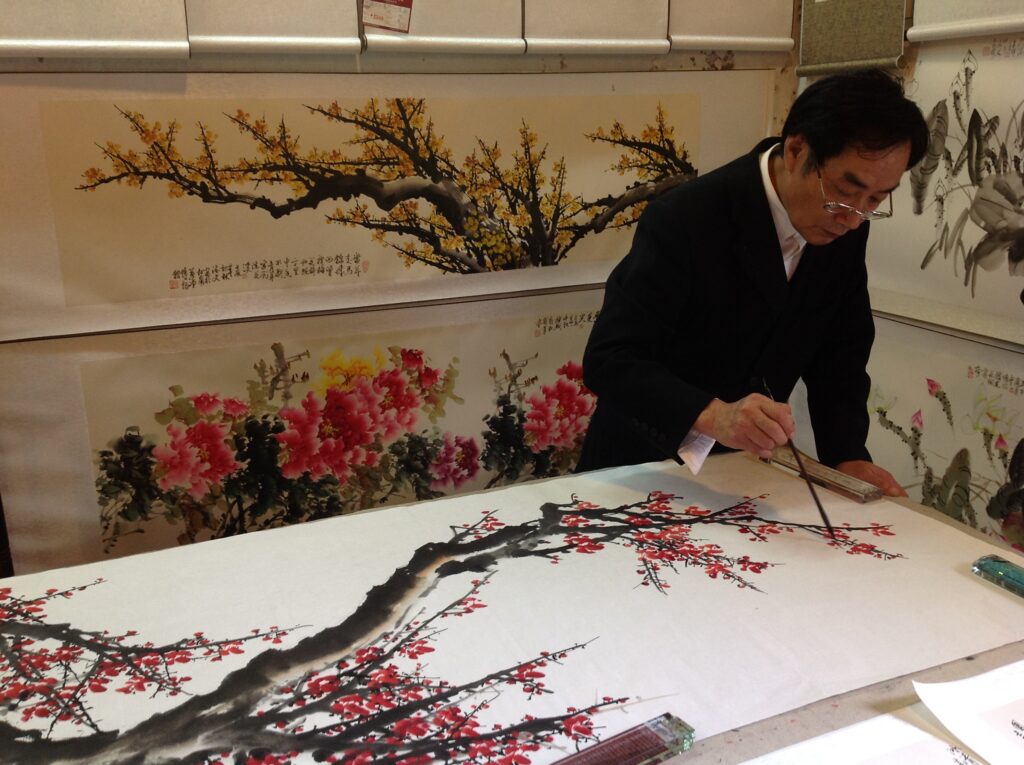
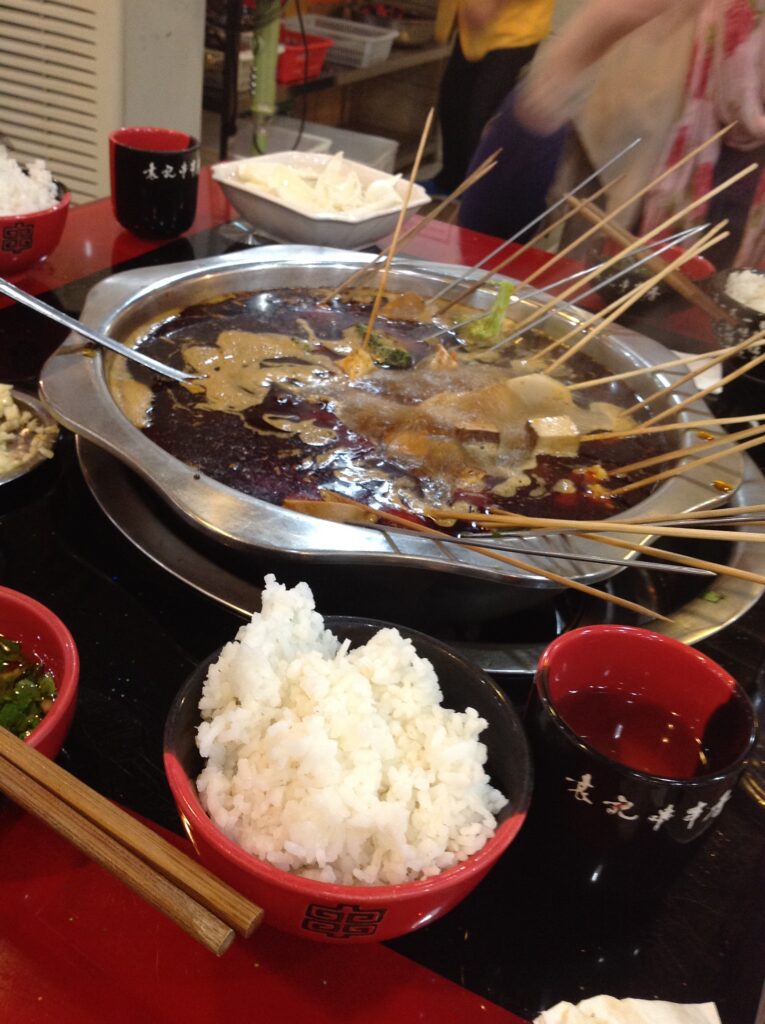
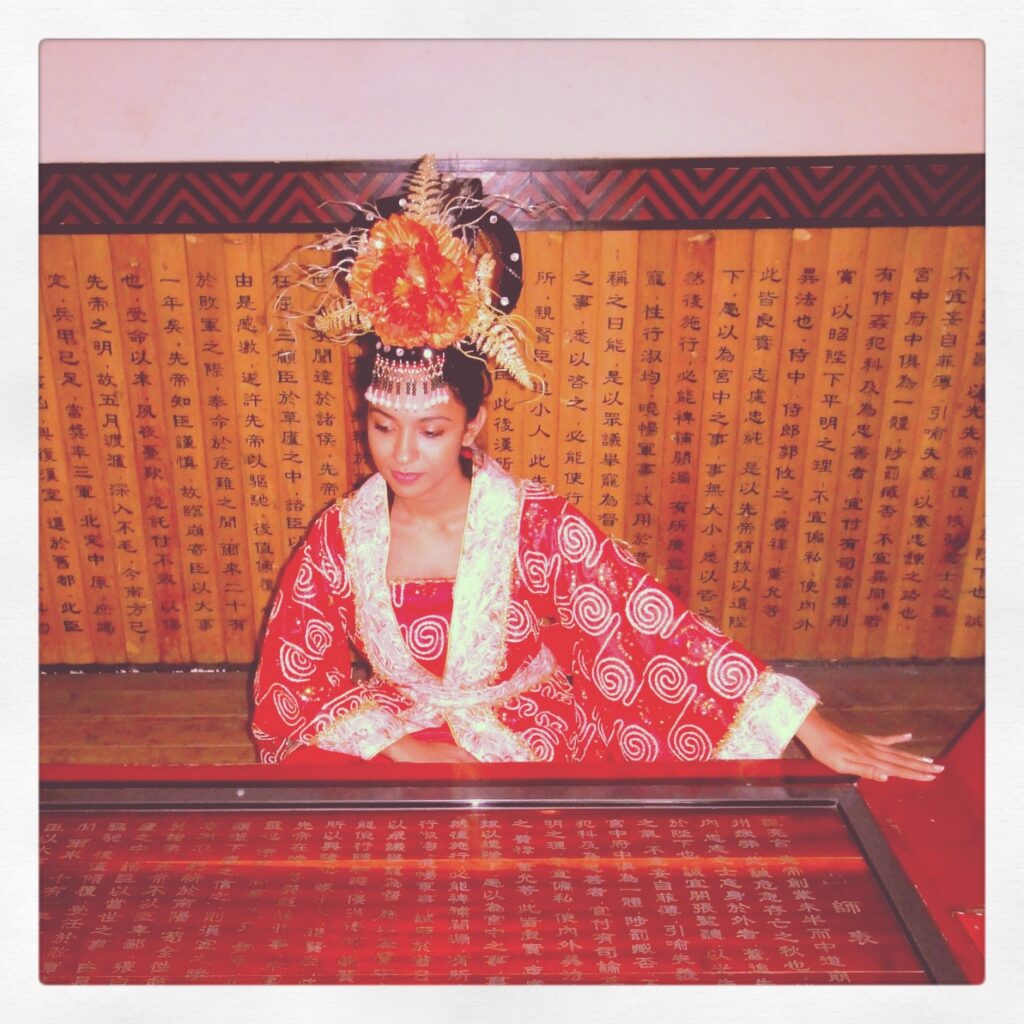
Years later, in 2017, I tried my hand at Chinese calligraphy and painting during a Maldives-China cultural event held at the National Art Gallery.
I have always fancied the idea of owning a qipao, or at the very least seeing one up close and appreciating the craftsmanship with my own hands. Strangely, I do not remember encountering one during my trip to Chengdu. Perhaps I was simply too much of a conventional tourist, following an itinerary centred on historical sites and museums.
On later trips to Malaysia, when I had more time to wander without purpose, I finally bought two traditional Chinese garments that I still treasure today. One was a black satin qipao with delicate floral embroidery in red; the other, a grey Tang-style shirt with short sleeves, traditional knot buttons and embroidered detailing. Technically, it was designed for men, but I have always borrowed freely from menswear whenever something catches my eye. I bought these pieces in 2022 and 2023.
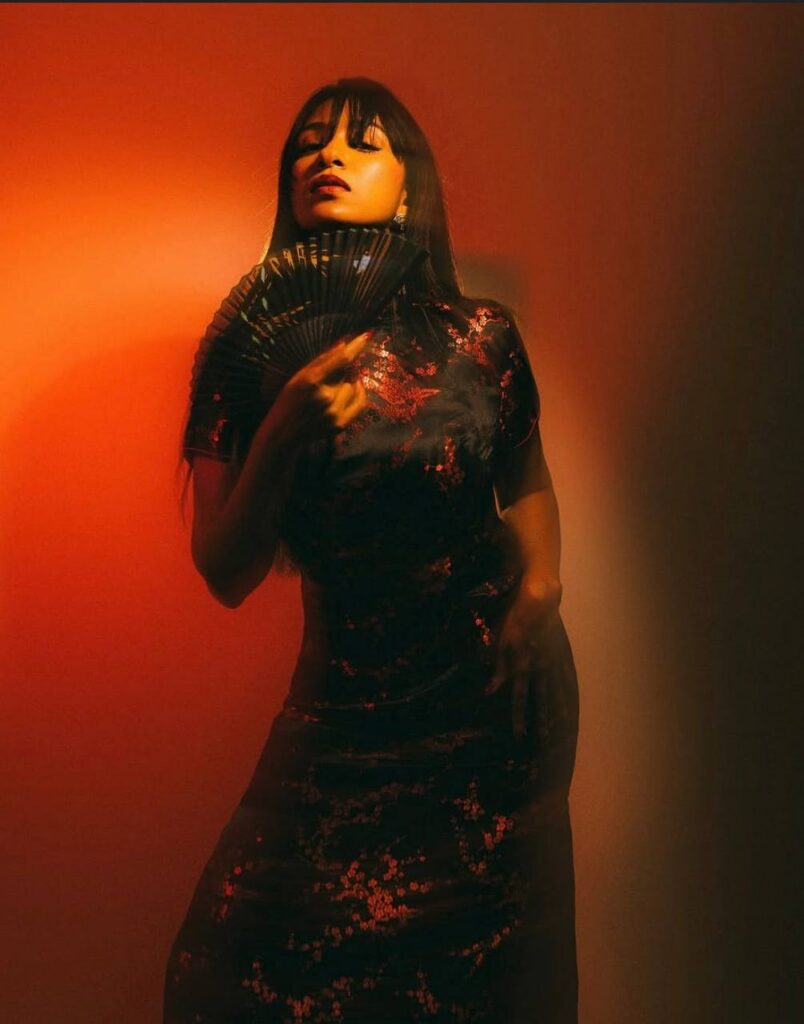
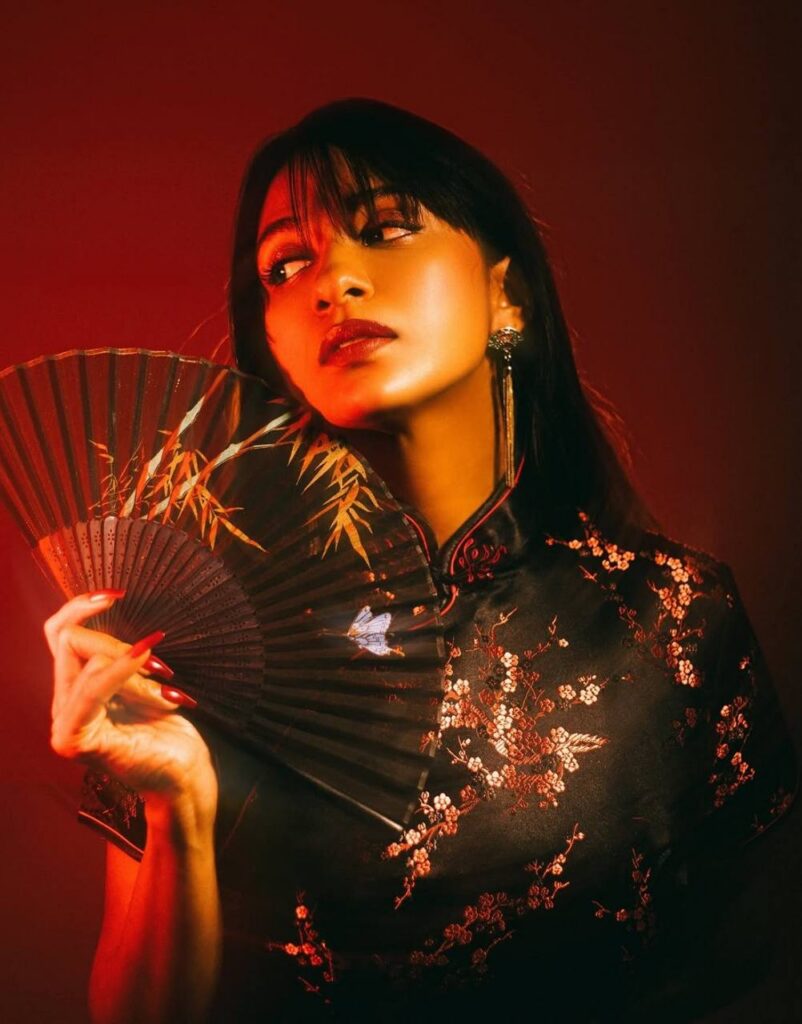
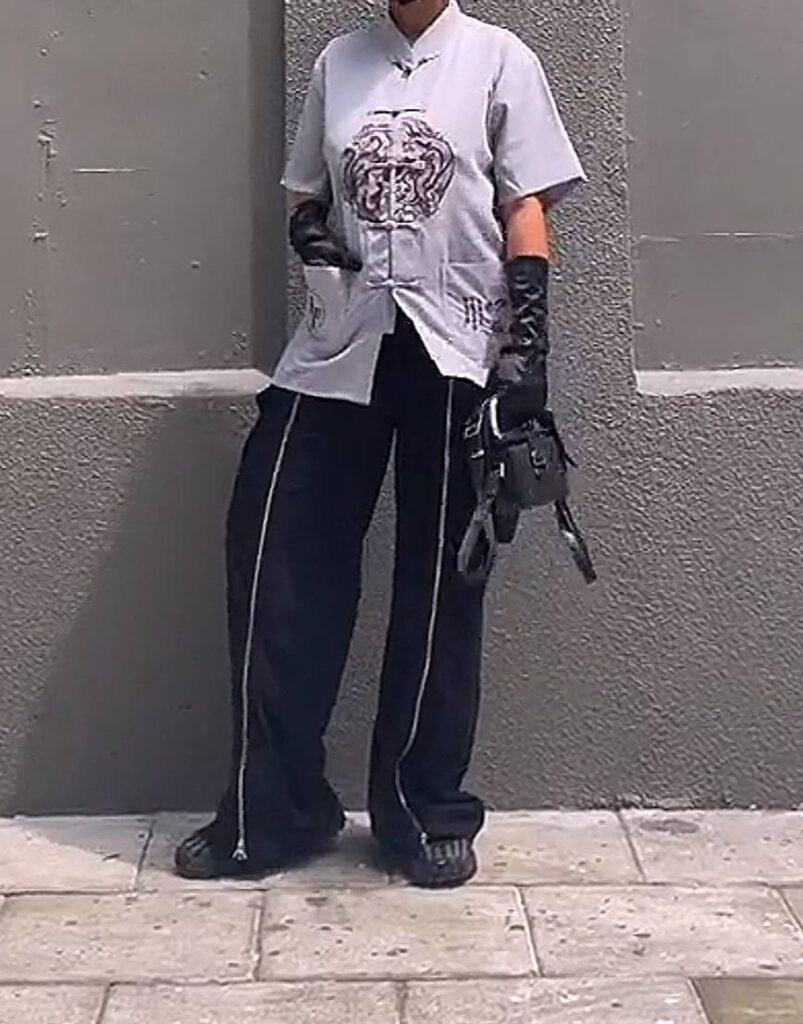
Fast forward to 2026, and fast-fashion platforms such as Temu and Shein are overflowing with qipao-inspired dresses and Tang-style tops. For anyone wanting to participate in the Chinamaxxing aesthetic, there is no shortage of options.
As I scroll through endless variations – traditional motifs reimagined through contemporary cuts and colours, I find myself wondering: how did we get here? Why are these distinctly Chinese references suddenly appearing everywhere in global fashion?
The West’s Endless Fascination with the East
By the late 2010s, major luxury houses including Dolce & Gabbana and Louis Vuitton had already begun incorporating Chinese influences into their collections, responding both to China’s growing consumer power and a renewed international interest in Chinese aesthetics.
As luxury markets expanded across Chinese cities, brands increasingly tailored their campaigns to Chinese consumers. Some efforts were more successful than others. Others – such as Dolce & Gabbana’s infamous 2018 advertising campaign – remain cautionary tales about cultural misunderstanding and stereotyping, a discussion perhaps best reserved for another day.
Nevertheless, one thing became clear: luxury fashion had recognised that economic and cultural influence was increasingly shifting eastward.
More recently, Adidas’ Tang jacket, released for Chinese New Year 2025, reflected a broader movement that aligns closely with contemporary Chinamaxxing culture. Initially sold exclusively in China for around USD 130, the jacket featured traditional knot fastenings alongside Adidas’ signature three stripes and branding.
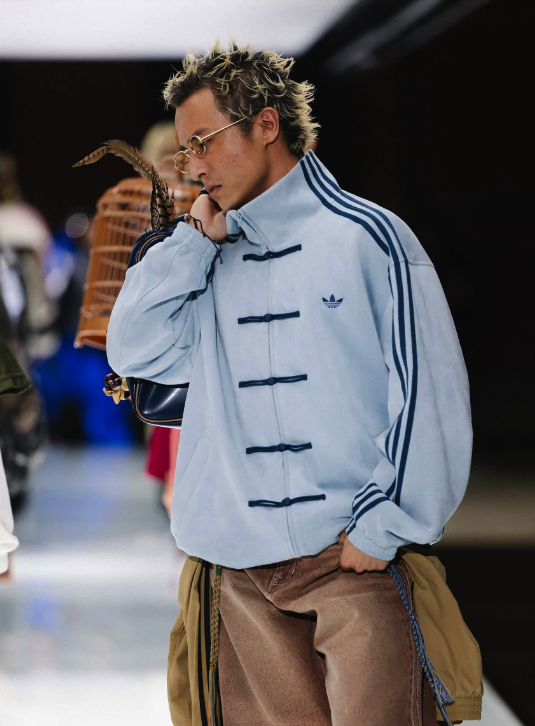
Social media propelled the design far beyond its original market. Soon, consumers across the world were searching for and purchasing the jacket, demonstrating that Chinese sartorial references had become globally desirable rather than regionally specific.
This is where Miranda Priestly’s famous cerulean blue monologue in The Devil Wears Prada feels surprisingly relevant. Fashion has always operated through a trickle-down effect. What begins on luxury runways eventually filters into mainstream consumption, and ultimately into fast fashion.
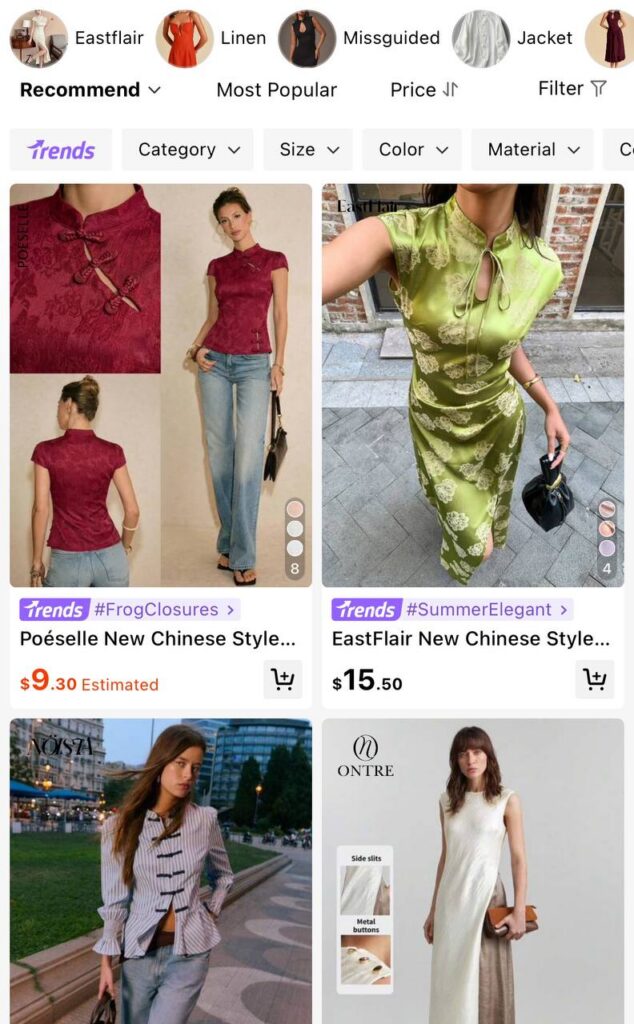
Of course, appreciating particular aesthetics does not necessarily imply an endorsement of a country’s politics, social systems or broader ideologies. Companies such as Temu and Shein are, above all, responding to consumer demand.
Fashion follows attention. Attention follows fascination.
Journalist and blogger Susie Bubble (one of my earliest inspirations when I first began blogging on Famushu in 2009) recently reflected on Max Mara’s 75th anniversary runway show at Shanghai’s Long Museum.
The Resort collection paid tribute to Shanghai itself, featuring an entirely local cast and garments that incorporated cheongsam silhouettes, mandarin collars and the auspicious reds traditionally associated with Chinese culture. Susie noted that Max Mara entered the Chinese market as early as 1993, long before many of its competitors, and praised designer Olivier Saillard’s reinterpretation of archival pieces from the house’s 2008 Beijing collection alongside vintage cheongsams.
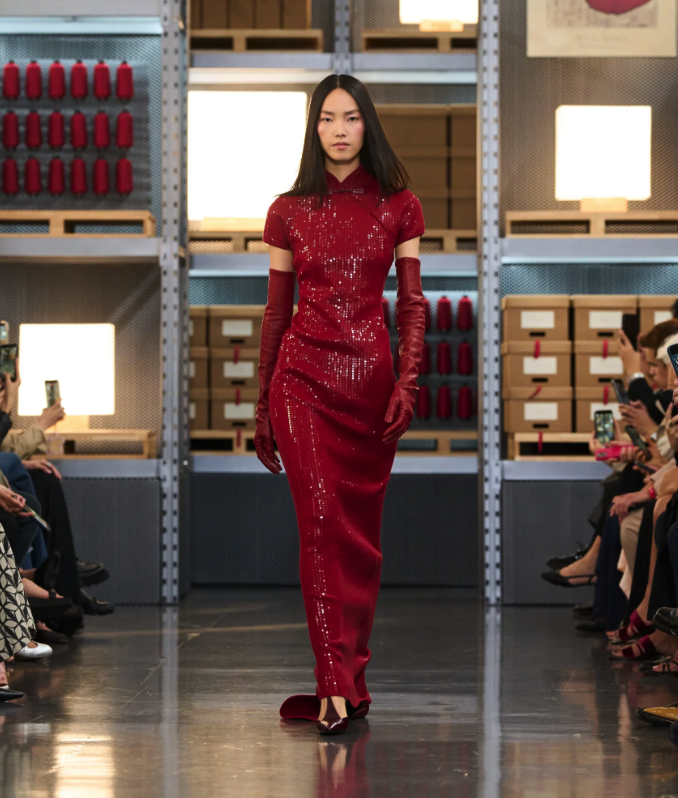
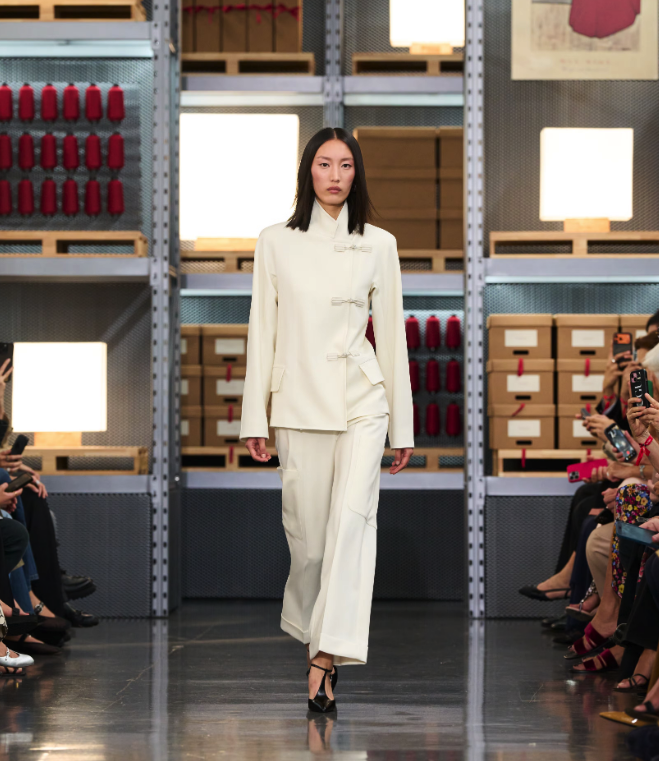
“The pankou fastening and cheongsam collar have gone beyond the realms of national dress and become a universal clothing language,” she wrote.
The boundaries between appreciation and appropriation remain complex, and debates around cultural borrowing are unlikely to disappear. Yet brands show little sign of retreating. What was once a ripple has become something far larger, extending even into small communities like the Maldives, where curiosity about other cultures has always existed among those drawn to the unfamiliar and the beautiful.
Just a Trend, or Something Deeper?
“I want to buy this shirt. It would look good on me, don’t you think?”
One of my closest friends asked me this while we were sitting in my apartment a few weeks ago. He held up his phone, displaying a black short-sleeved shirt from Temu, complete with the traditional knot fastenings associated with Tang jackets.
It was understated, elegant and quietly sophisticated – a subtle meeting point between Eastern and Western design languages.
And on my own social media feeds, I continue to see similar influences emerge: qipao-inspired black dresses worn for nights out, mandarin collars incorporated into contemporary tailoring, traditional elements reimagined for modern wardrobes.
Whether knowingly or otherwise, Chinamaxxing has already arrived.
Part of me enjoys seeing people embrace different styles and aesthetics, incorporating them into their personal expression. After all, that is precisely what I have done. I am fascinated by the beauty, craftsmanship and history embedded within these traditions.
Initially, my appreciation did not extend much further than aesthetics.
But eventually, a question began to linger: can admiration simply exist as admiration? Is beauty alone enough, or must we always interrogate the political, historical and social contexts that surround it?
And perhaps that is where Chinamaxxing becomes more interesting than the internet joke it first appeared to be.
Can We Separate Fashion from Politics?
As a Maldivian, perhaps this is where the conversation becomes more complicated.
Can we admire a culture through its clothing, food and aesthetics without engaging with the politics that inevitably accompany it? Or is that separation itself a privilege afforded by distance?
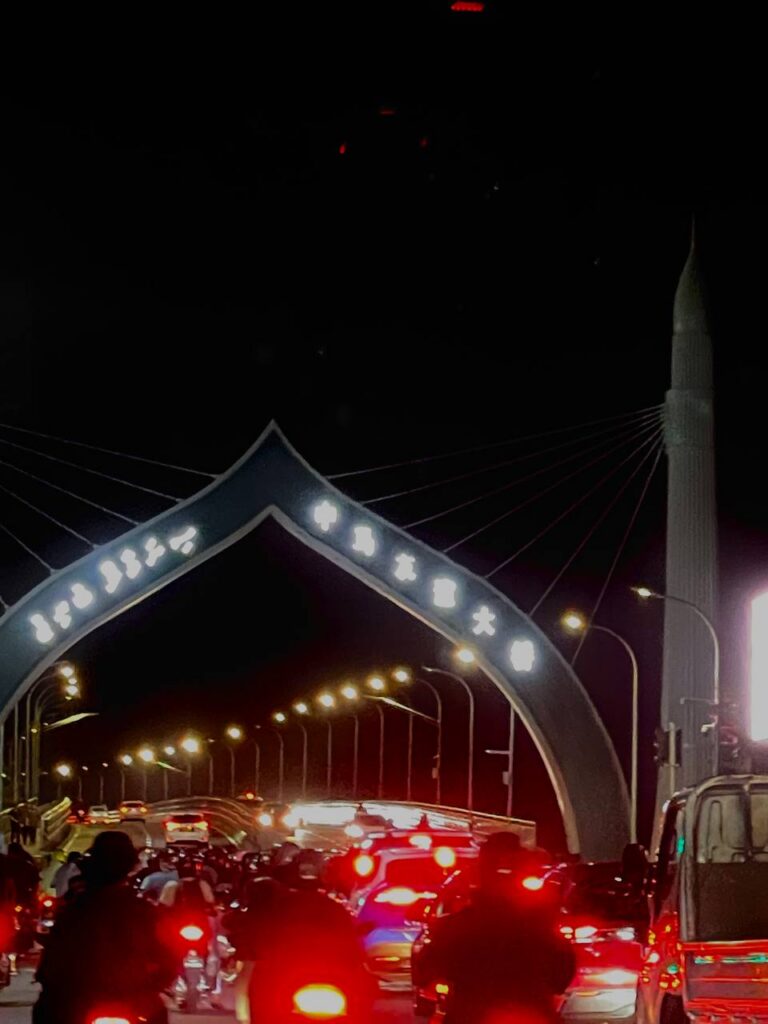
The Maldives’ relationship with China is neither simple nor straightforward. It is visible in our infrastructure, our economy and our political discourse. The Sinamalé Bridge, connecting Greater Malé, stands as perhaps the most recognisable symbol of that – praised by some as a transformative development project and criticised by others as evidence of increasing economic dependence.
Yet our connections with China are far older than contemporary geopolitics.
Historical records suggest that exchanges between the two countries date back more than thirteen centuries. During the Tang dynasty, Maldivian envoys are said to have visited the imperial court, bearing gifts from King Baladitiya to Emperor Gaozong in 658 AD and again in 662 AD. Chinese sources referred to our islands as Mo-lai, while the famed explorer Zheng He visited the Maldives during his maritime expeditions in 1412 and 1417.
Fragments of that shared history remain embedded within our own material culture. The seenu thashi – Chinese porcelain plates, bowls and jars found in the National Museum and many family collections – stand as enduring evidence of centuries-old trade networks across the Indian Ocean. Some of these pieces are believed to date as far back as the 15th and 17th centuries, their delicate blue-and-white patterns serving as quiet reminders that cultural exchange between the Maldives and China long predates modern diplomacy.
Historically, the Maldives has occupied a strategic position along major Indian Ocean sea routes, making it an important location within China’s broader maritime ambitions and the Belt and Road Initiative. Successive Maldivian administrations have engaged with Beijing in varying capacities, often welcoming investment and infrastructure projects while simultaneously navigating concerns about sovereignty, debt and geopolitical influence.
Critics, including former President Mohamed Nasheed, have repeatedly warned about the dangers of debt dependency, arguing that China’s economic engagement can evolve into political leverage. The oft-cited example is Sri Lanka’s Hambantota Port, leased to a Chinese company for 99 years after financial difficulties made repayment increasingly challenging. Others, however, contend that such narratives simplify far more complex domestic economic realities and unfairly place responsibility solely on Beijing.
Whatever one’s political position may be, it is difficult to deny that China’s global influence extends far beyond trade alone. Economic relationships, cultural exchange and soft power frequently operate alongside one another, shaping perceptions and creating new forms of interconnectedness.
The China-Australia relationship offers another example. In recent years, diplomatic tensions between the two nations have highlighted the ways in which economic partnerships can become entangled with political disagreements, demonstrating that these conversations are not unique to small island states such as the Maldives.
Closer to home, public opinion itself often appears divided. Discussions surrounding infrastructure development, foreign investment and national interests are frequently framed through an India-versus-China lens, reflecting broader geopolitical currents that continue to influence domestic politics.
The COVID-19 pandemic added yet another layer of complexity. Across the world, anti-Chinese sentiment and xenophobic rhetoric surged, reminding us how quickly cultural fascination can coexist with prejudice and suspicion. It is a contradiction that deserves acknowledgement: celebrating a culture when it is fashionable while distancing ourselves from its people when political tensions arise.
None of this means that appreciating Chinese fashion, art or traditions is inherently problematic. Cultural exchange has always shaped the way people dress, eat and create. The very fabrics we wear and the silhouettes we consider timeless often emerge from centuries of movement, trade and adaptation.
Yet perhaps appreciation becomes more meaningful when accompanied by an understanding of history. Clothing is never entirely separate from the societies that produce it. Every collar, fastening and silhouette carries stories that extend beyond aesthetics alone.
To wear something because it is beautiful is perfectly human. To know where that beauty comes from, however, is an entirely different kind of appreciation.
The China Effect Is Here to Stay
“Chinamaxxing,” as an internet phenomenon, is largely playful.
Like most online trends, it thrives on irony, aesthetics and the collective excitement of discovering something that suddenly feels new – even when it has existed for centuries. It may disappear as quickly as it arrived, replaced by another viral obsession in a matter of months.
The internet has never been particularly patient.
Yet I suspect the instinct behind Chinamaxxing points towards something far more enduring.
China’s cultural influence is no longer confined to geography. It exists in fashion weeks, on social media feeds, in global beauty trends and increasingly within the everyday wardrobes of people thousands of miles away. The appeal is undeniable: a certain elegance, an appreciation for craftsmanship, silhouettes that feel both historical and contemporary, and a visual language that has somehow become effortlessly cool.
Fashion, after all, has always been political – even when we pretend otherwise.
The clothes we choose to wear reveal who we admire, what we consume and the worlds we wish to belong to. They reflect larger movements of power, commerce and cultural exchange. What begins as fascination with a Tang jacket or a qipao-inspired dress inevitably opens conversations about history, identity and global influence.
Perhaps that is why Chinamaxxing interests me.
Not because I believe everyone should suddenly start drinking herbal tea every morning or replacing their wardrobes with traditional Chinese garments, but because the trend offers a lens through which to examine the world around us. It forces us to think about how cultures travel, how aesthetics become universal, and how political realities continue to shape even the most seemingly harmless aspects of everyday life.
And maybe, in the end, that is the real story.
The internet will eventually move on. Another trend will arrive. Another phrase will dominate our timelines.
But the China effect – economically, culturally and sartorially – is unlikely to slow down anytime soon.
Whether we call it Chinamaxxing or something else entirely, we are already living through a moment in which Chinese influence is being reinterpreted, consumed and woven into global culture in ways that are both fascinating and deeply complex.
Perhaps the most important thing is not simply to participate, but to remain curious enough to ask why.